
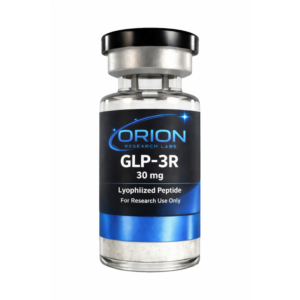
GLP-3 R is a next-generation triple-agonist research peptide studied for coordinated activity across GLP-1, GIP, and glucagon receptor pathways.
Laboratories investigate this compound in models related to appetite regulation, energy expenditure, thermogenesis, and integrated metabolic control.
Why labs can’t go without it:
-
Triple activity across GLP-1, GIP, and glucagon pathways
-
Studied in energy expenditure and thermogenesis models
-
Explored for broad metabolic regulation research
-
Considered a defining compound in next-generation metabolism studies
| Parameter | Description |
|---|---|
| Application | Research compound |
| CAS | 2381089-83-2 |
| Molar Mass | 5058.5 g/mol |
| Chemical Formula | C₂₄₉H₃₇₆N₆₂O₇₆ |
| Amino Acid Sequence / Chemical Structure | Tri-agonist analogue targeting GLP-1, GIP, and glucagon receptors |
| Synonyms | LY3437943 |
| Storage | Store refrigerated at 2–8 °C, tightly sealed and protected from heat, light, and moisture |
| Solubility | Soluble in sterile or bacteriostatic water |
| Organoleptic Profile | White to off-white lyophilized powder |
| Specification | Purity ≥ 98% (HPLC) · Supplied in 3 mL sealed glass vial |
| Research Use | For laboratory research use only. Not for human consumption |
How Do I Store Peptides?
Proper storage is essential to preserve stability, integrity, and research reliability.
📦 Lyophilized (Freeze-Dried) Peptides
-
Short-term (1–2 weeks): Store in a cool, dry place away from direct sunlight.
-
Long-term: Keep vials sealed and store at −20 °C for maximum stability.
💧 Reconstituted Peptides (if applicable)
-
Store at 2–8 °C in a refrigerator and use within a few weeks.
-
Avoid repeated freeze–thaw cycles to maintain compound quality.
⚠️ Important
-
Keep vials sealed until ready for laboratory use.
-
Protect from moisture, heat, and light exposure at all times.
Reviews
There are no reviews yet.