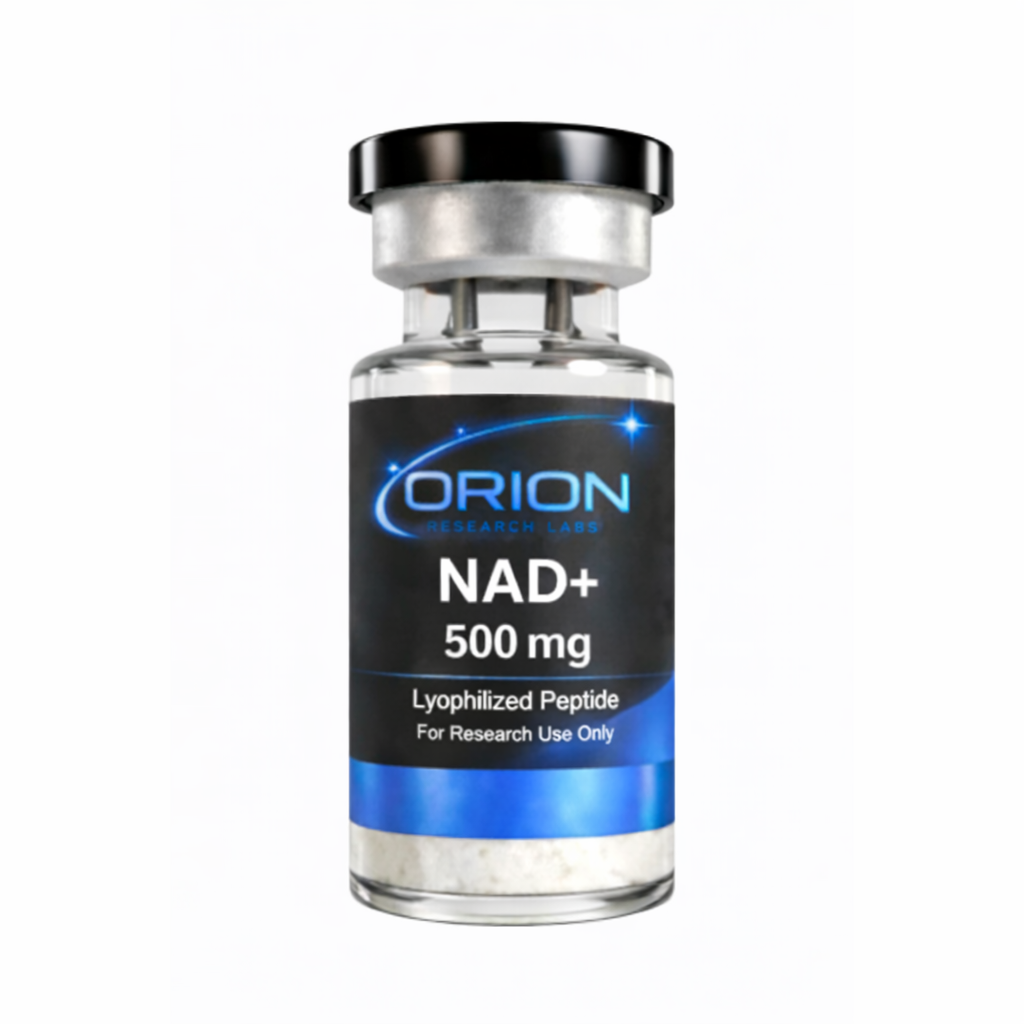
NAD⁺ is central to cellular energy and longevity research. Laboratories study this essential coenzyme for its role in mitochondrial activity, DNA repair mechanisms, and cellular resilience pathways.
Why labs can’t go without it:
-
Studied in ATP production and metabolic function
-
Explored in longevity and DNA repair models
-
Investigated within cellular stress-resistance pathways
-
Considered a foundational compound in modern biochemical research
| Parameter | Description |
|---|---|
| Application | Research compound |
| CAS | 53-84-9 |
| Molar Mass | 663.43 g/mol |
| Chemical Formula | C₂₁H₂₇N₇O₁₄P₂ |
| Amino Acid Sequence / Chemical Structure | β-Nicotinamide adenine dinucleotide (oxidized), non-peptide coenzyme |
| Synonyms | NAD⁺ (oxidized form) |
| Storage | Store refrigerated at 2–8 °C, tightly sealed, protected from heat, light, and moisture |
| Solubility | Water-soluble; compatible with aqueous buffers |
| Organoleptic Profile | White to off-white lyophilized powder |
| Specification | Purity ≥ 99% · Supplied in sealed glass vial |
| Research Use | For laboratory research use only. Not for human consumption |
How Do I Store Peptides?
Proper storage is essential to preserve stability, integrity, and research reliability.
📦 Lyophilized (Freeze-Dried) Peptides
-
Short-term (1–2 weeks): Store in a cool, dry place away from direct sunlight.
-
Long-term: Keep vials sealed and store at −20 °C for maximum stability.
💧 Reconstituted Peptides (if applicable)
-
Store at 2–8 °C in a refrigerator and use within a few weeks.
-
Avoid repeated freeze–thaw cycles to maintain compound quality.
⚠️ Important
-
Keep vials sealed until ready for laboratory use.
-
Protect from moisture, heat, and light exposure at all times.
Reviews
There are no reviews yet.